If you’ve ever stood at a table sorting loose change, trying to remember exactly how many coins go in each roll, you’re not alone. Indeed, this guide brings together the coin roll wrapper sizes and values for every standard U.S. coin denomination, pennies, nickels, dimes, and quarters, in one complete reference chart.
Overall, whether you’re prepping a bank deposit, restocking a small business cash drawer, or just organizing a coin collection, this page is designed to be your go-to reference for exact coin counts, roll values, and wrapper colors.
The Complete Coin Roll Wrapper Sizes and Values Chart
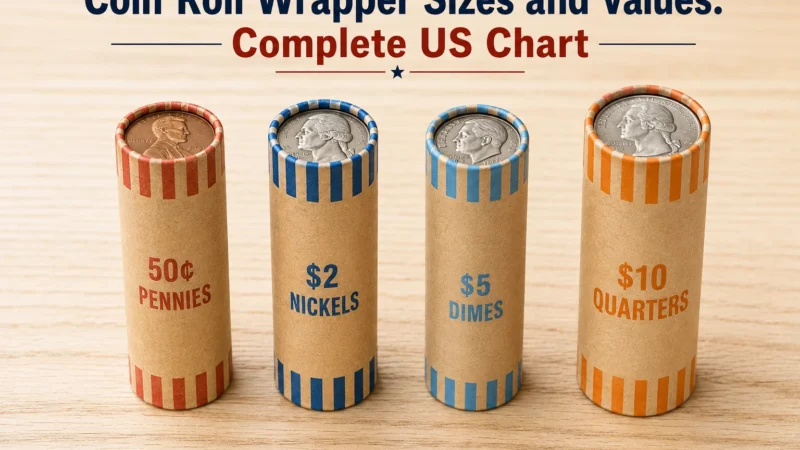
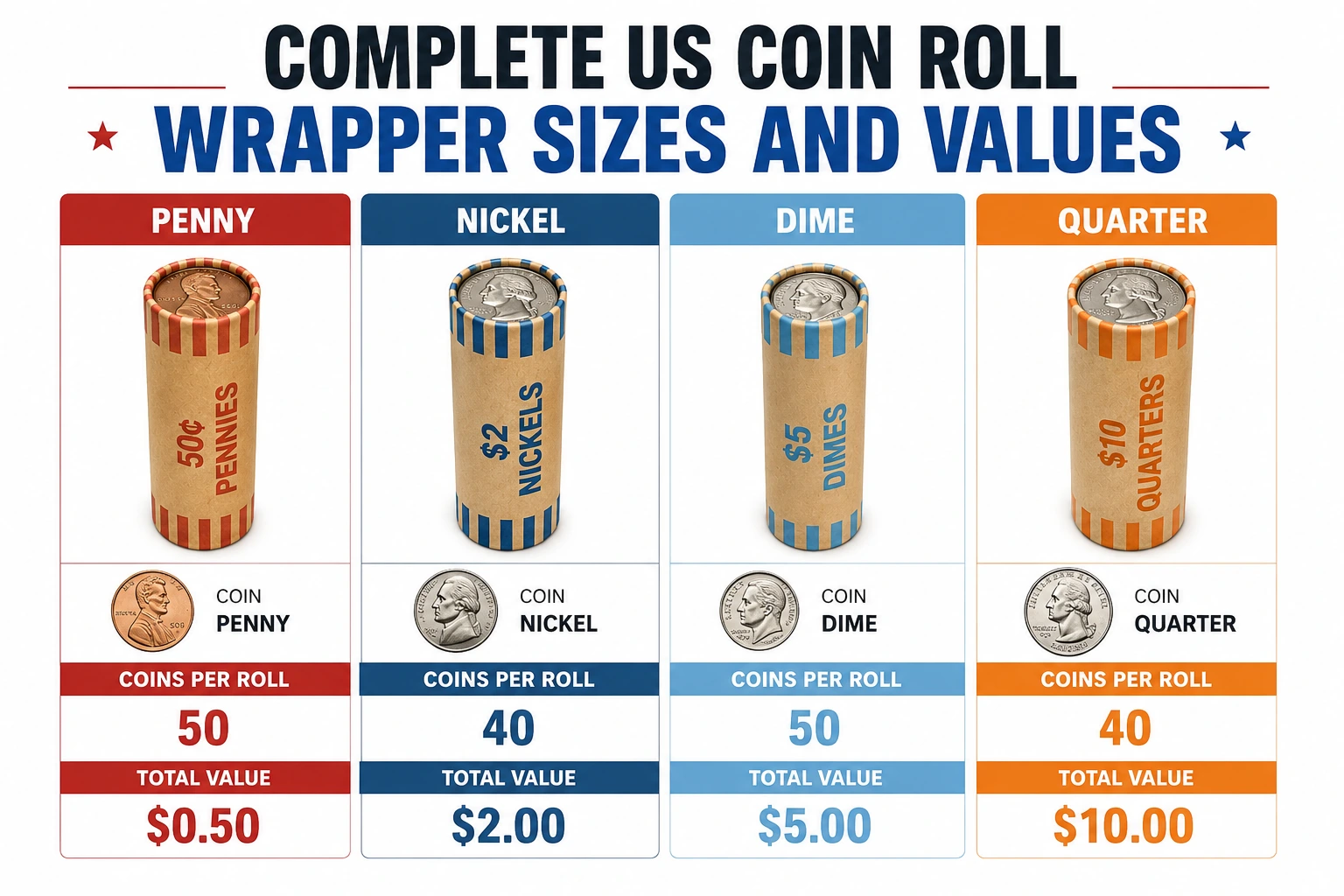
Here’s the full breakdown for all four standard U.S. coin roll types:
| Coin Type | Coins Per Roll | Roll Value | Typical Wrapper Color |
|---|---|---|---|
| Penny | 50 | $0.50 | Red |
| Nickel | 40 | $2.00 | Blue |
| Dime | 50 | $5.00 | Light-Blue |
| Quarter | 40 | $10.00 | Orange |
A quick note on wrapper colors: while these are the most commonly used colors across major U.S. banks and coin wrapper manufacturers, colors can vary slightly by brand. Always check the printed label on the wrapper itself rather than relying on color alone, especially when buying wrappers from an office supply store rather than directly from your bank. The Federal Reserve publishes the standard wrapper color conventions that most U.S. banks follow.
Why Coin Rolls Come in Different Sizes
You might notice, for instance, that pennies and dimes both use 50-coin rolls, while nickels and quarters use 40-coin rolls. This isn’t random. It comes down to the physical size and weight of each coin, combined with long-standing packaging conventions set by the U.S. Mint and Federal Reserve to keep individual rolls a manageable, consistent length regardless of coin type. For example, nickels and quarters are physically larger and heavier than pennies and dimes, so fewer coins are used per roll to keep the overall roll size practical for handling, transporting, and storing.
Individual Coin Roll Breakdowns
If you want a deeper dive into any specific coin roll, including step-by-step rolling instructions, real-world use cases, and FAQs, then check out our full individual guides:
- How Much Is a Roll of Pennies Worth? — 50 coins, $0.50 total
- How Much Is a Roll of Nickels Worth? — 40 coins, $2.00 total
- How Much Is a Roll of Dimes Worth? — 50 coins, $5.00 total
- How Much Is a Roll of Quarters Worth? — 40 coins, $10.00 total
How to Roll Any Coin Correctly (General Steps)
While exact coin counts differ by denomination, the general rolling process is the same across all four coin types:
- Sort your coins by denomination. Mixed piles need to be separated before rolling; mixing coin types in a single wrapper will cause your bank to reject the roll.
- Count out the exact number required for that coin type (see the chart above). Most banks strictly enforce exact counts.
- Choose the correct wrapper. Match the wrapper to the coin type, either by color convention or by checking the printed label.
- Fold and crease both ends of the wrapper firmly to keep the coins secure during transport.
- Label the roll with your name or account number if your bank requires it for deposit processing.
Furthermore, if counting out exact amounts by hand feels error-prone, our free Coin Counter tool can track your running total as you sort, so you always know exactly when you’ve hit the right count for a full roll.
How Coin Roll Value Scales With Larger Deposits
Similarly, once you know the value of a single roll, scaling up to larger deposit amounts is simple multiplication. Here’s a side-by-side comparison of how many rolls of each coin type you’d need to reach common dollar amounts:
| Dollar Amount | Penny Rolls | Nickel Rolls | Dime Rolls | Quarter Rolls |
|---|---|---|---|---|
| $10 | 20 | 5 | 2 | 1 |
| $50 | 100 | 25 | 10 | 5 |
| $100 | 200 | 50 | 20 | 10 |
As a result, this table makes it obvious why quarter rolls are the preferred choice for businesses that need to store or transport large coin values efficiently. You need far fewer rolls (and far less physical space) to reach the same dollar total compared to pennies or nickels.
Real-World Situations Where This Chart Comes in Handy
Bank deposits. Knowing exact roll counts in advance prevents wasted trips caused by short or overfilled rolls, which many banks will reject outright.
Small business cash management. Meanwhile, retailers and cashiers who regularly restock a cash drawer benefit from having pre-rolled coins on hand across all four denominations. Our Cash Drawer Count Sheet tool helps track every denomination, bills and coins, during a shift reconciliation.
Vending, laundry, and parking businesses. These cash-heavy businesses deal almost exclusively in quarters and need to move large coin volumes efficiently, making roll math a daily necessity.
Coin collecting (“roll hunting”). Collectors purchase unopened bank-wrapped rolls specifically to search for rare, older, or silver-content coins mixed in with common circulating currency.
Coin jar cleanouts. If you’re finally sorting years of accumulated spare change, this chart helps you estimate your jar’s total value and figure out how many wrappers of each type you’ll need before you start.
A Faster Way to Count Mixed Coin Totals
In short, if your coin jar or cash drawer includes a mix of pennies, nickels, dimes, and quarters all at once, manually applying this chart to each denomination separately gets tedious fast. Our free Money Counter tool lets you enter quantities for every coin type in one place and calculates your combined total instantly, with export options for PDF, Excel, or CSV so you have a clean record for your deposit slip or business books.
Final Thoughts on Coin Roll Wrapper Sizes and Values
Whether you’re rolling pennies, nickels, dimes, or quarters, this chart gives you the exact coin count and dollar value for every standard U.S. coin roll in one place. Bookmark this page as your go-to reference the next time you’re prepping a bank deposit or sorting a jar of loose change, and check out the individual guides linked above for step-by-step rolling instructions specific to each coin type.
Ready to count a full jar of mixed coins before you start rolling? Try our free Coin Counter and get an instant, accurate total across every denomination.
Frequently Asked Questions
How many coins are in a standard U.S. coin roll?
It depends on the denomination: 50 pennies, 40 nickels, 50 dimes, or 40 quarters make up a standard roll.
What is the total value of each type of coin roll?
A penny roll is worth $0.50, a nickel roll is worth $2.00, a dime roll is worth $5.00, and a quarter roll is worth $10.00.
What colors are coin wrappers?
Typical conventions are red for pennies, blue for nickels, light-blue for dimes, and orange for quarters, though colors can vary slightly by manufacturer, so always check the printed label.
Why do pennies and dimes both use 50-coin rolls while nickels and quarters use 40?
It comes down to coin size and weight. Nickels and quarters are physically larger and heavier, so fewer coins are used per roll to keep the overall roll a manageable, consistent size.
Can I mix coin denominations in a single roll?
No. Coin wrappers are designed for a single denomination only, and banks will reject rolls that contain mixed coin types.
Where can I get coin wrappers?
Most banks and credit unions provide free paper coin wrappers to account holders. They’re also available at office supply stores and online in bulk packs.
How many quarter rolls equal $100?
It takes exactly 10 quarter rolls to reach $100, since each roll is worth $10.
What’s the easiest way to count a large mixed pile of coins before rolling them?
Sort by denomination first, then use a free tool like our Coin Counter to get an instant, accurate total for each coin type before you start wrapping.