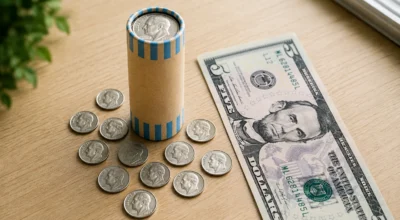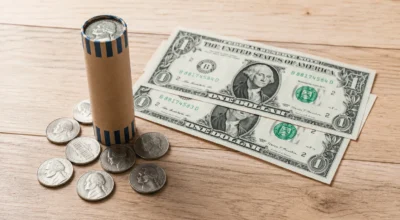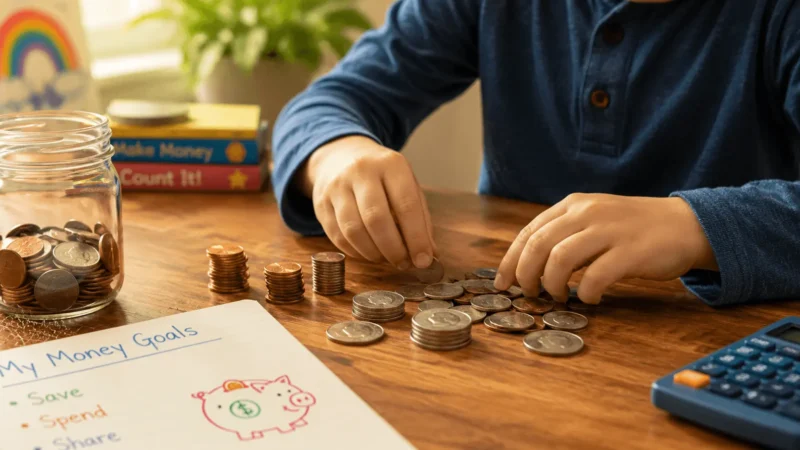
Learning how to count money for kids is one of the most important real-world skills you can teach a child. It builds on basic math such as addition, skip counting, and multiplication. It also connects those concepts to something children can see and use in everyday life. Whether you are a parent teaching at home or a teacher introducing money in the classroom, this step-by-step guide covers everything from coin recognition all the way to making change.
Most children are ready to start learning the basics between ages 5 and 7. Furthermore, they usually progress from counting same-denomination coins to handling mixed bills and making change by age 9 or 10. The key is building confidence at each stage before moving on to the next one.
Step 1: Teaching Kids to Count Coins by Name and Value
Before a child can count money, they need to know what each coin is. Start by introducing one coin at a time. Do not rush this step because it is the foundation for everything that follows.
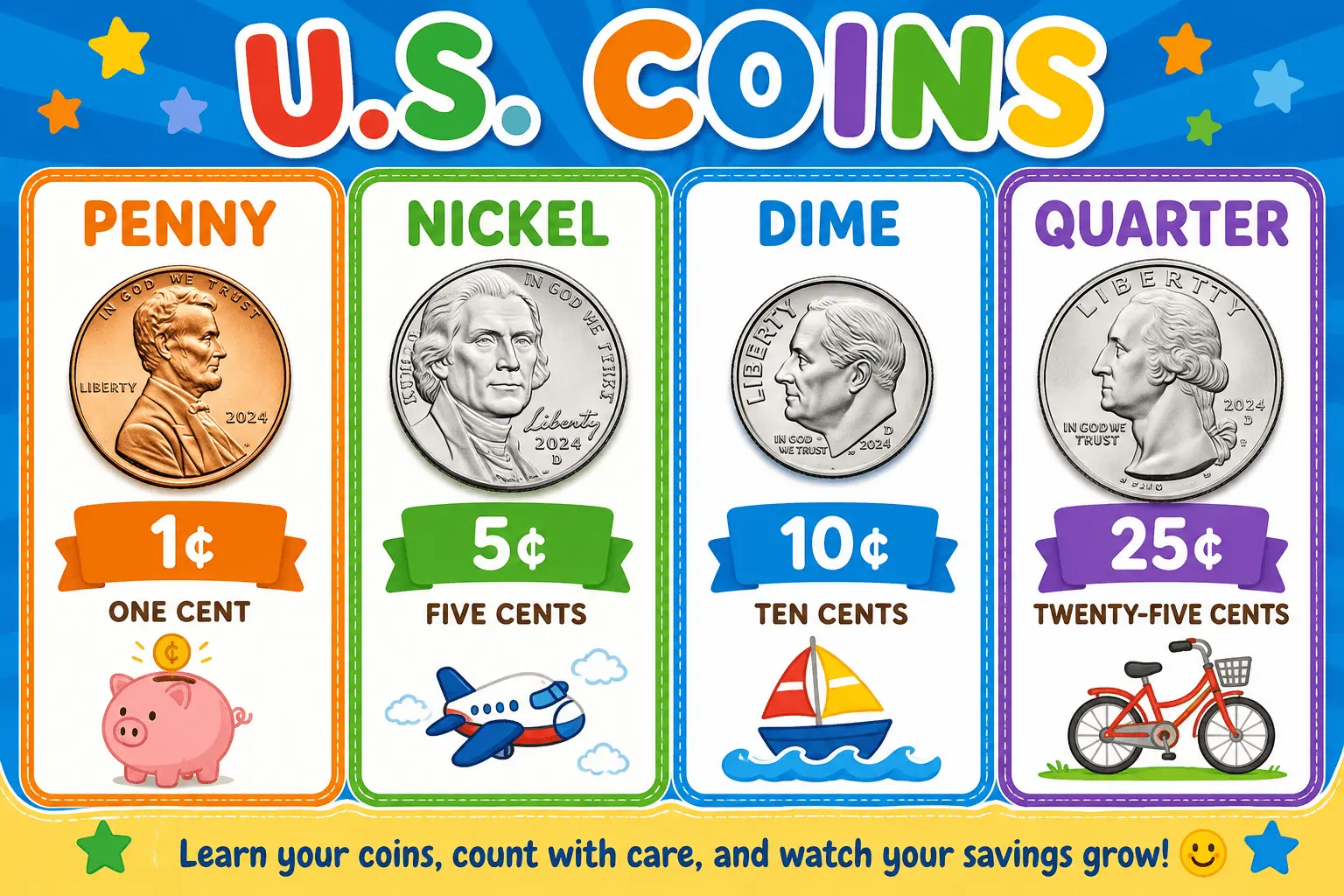
Here are the four main US coins your child needs to learn first:
| Coin Name | Value | Color | Who Is on It? |
|---|---|---|---|
| Penny | 1 cent ($0.01) | Copper/brown | Abraham Lincoln |
| Nickel | 5 cents ($0.05) | Silver | Thomas Jefferson |
| Dime | 10 cents ($0.10) | Silver (small) | Franklin Roosevelt |
| Quarter | 25 cents ($0.25) | Silver (large) | George Washington |
One important point to teach early: the size of a coin does not determine its value. The dime is smaller than the nickel but worth twice as much. This surprises many children at first. So spend extra time on this comparison before moving forward.
Activity idea: Lay all four coins on a table. Ask your child to pick up each one as you call its name. Then reverse it. Hold up a coin and ask them to name it and state its value. Repeat this until they respond quickly and confidently without hesitation.
Step 2: Teaching Kids to Count Same-Denomination Coins
Once your child can identify all four coins, the next step is counting sets of the same coin. This is much simpler than counting mixed coins because it only requires skip counting. In addition, most children already practice skip counting in school, so this step connects to something familiar.
- Counting pennies: count by 1s (1, 2, 3, 4, 5…)
- Counting nickels: count by 5s (5, 10, 15, 20, 25…)
- Counting dimes: count by 10s (10, 20, 30, 40, 50…)
- Counting quarters: count by 25s (25, 50, 75, 100…)
The skip counting connection is powerful. Children who already practice counting by 5s and 10s in class can apply that skill directly to coins. Therefore, reinforce this by having them count out loud using the coin’s value instead of plain numbers. For example, say “five, ten, fifteen” for nickels rather than “one, two, three.”
Activity idea: Give your child 10 dimes and ask them to count out 50 cents worth. Then ask how many dimes they used. The answer is 5. Next, try the same exercise with nickels. How many nickels make 50 cents? The answer is 10. This comparison helps children see how coin values relate to each other.
Step 3: Teaching Kids to Count Mixed Coins
Once same-denomination counting is solid, introduce mixed coin groups. This is where most children struggle at first. However, the right strategy makes all the difference.
The golden rule for counting mixed coins: always start with the highest-value coin and work down. Here is the order to follow:
- Start with quarters
- Then add dimes
- Then add nickels
- Finally, add pennies
Walk through an example together. Suppose your child has 2 quarters, 1 dime, 2 nickels, and 3 pennies. Starting from the highest coin, count aloud: “25, 50 (quarters), 60 (dime), 70, 80 (nickels), 81, 82, 83 (pennies).” Total: $0.83.
The key is to count out loud and keep a running total. Do not add each coin type separately and then add the groups together. Instead, count continuously from the highest to the lowest, saying the running total as you go. As a result, this method is faster and less error-prone than adding groups at the end.
Step 4: How to Count Money for Kids Using Bills
After coins, introduce US dollar bills. Start with the four bills children see most often: $1, $5, $10, and $20.
| Bill | Value | Who Is on It? | Color Hint |
|---|---|---|---|
| $1 bill | $1.00 | George Washington | All green |
| $5 bill | $5.00 | Abraham Lincoln | Light purple tint |
| $10 bill | $10.00 | Alexander Hamilton | Orange tint |
| $20 bill | $20.00 | Andrew Jackson | Light green/peach |
Start by sorting bills by denomination and counting each pile separately. Then practice combining bills and coins. For example: “You have two $5 bills, one $1 bill, and three quarters. How much is that?” ($10 + $1 + $0.75 = $11.75).
Furthermore, for counting larger amounts of mixed bills, our free Money Counter at MoneyCounter.site lets children verify their totals digitally after counting by hand.
Step 5: Teaching Kids to Make Change
Making change is the final and most practical step. It is the skill children use at shops, lemonade stands, and eventually in work settings. There are two main methods to teach.
Method 1: Subtraction
Subtract the cost from the amount paid. For example, if something costs $0.67 and the customer pays $1.00, the change is $1.00 minus $0.67 which equals $0.33. Then find the most efficient coin combination to make $0.33. That is 1 quarter, 1 nickel, and 3 pennies.
Method 2: Count Up (Recommended for Beginners)
Start at the price and count up to the amount paid. If something costs $0.67 and the customer pays $1.00, start at $0.67 and count up. Add 3 pennies to reach $0.70. Then add 1 nickel to reach $0.75. Then add 1 quarter to reach $1.00. The change is 3 pennies, 1 nickel, and 1 quarter, which equals $0.33.
Most cashiers prefer the count-up method because it is easier to verify. For practice, our free Change Calculator shows the exact change for any transaction amount.
Activities to Practice Counting Money for Kids
The most effective way to teach children how to count money is through hands-on practice. Here are four activities that work well for ages 5 to 10.
- Play Store: Set up a pretend shop with price tags. Give your child play money or real coins and let them buy items and receive change.
- Coin Jar Challenge: Give your child a coin jar and ask them to count the total each week. Record the amount and watch it grow over time.
- Restaurant Game: Look at a simple restaurant menu together. Give them a budget and ask them to choose items that stay within it, then calculate the total.
- Digital Practice: After counting their coins by hand, let them use our free Coin Counter to check their total. This builds a useful self-checking habit.
According to the Common Core State Standards for Grade 2 Mathematics, children are expected to solve word problems involving dollar bills, quarters, dimes, nickels, and pennies by the end of second grade. In addition, Khan Academy Kids offers free interactive money counting activities for children aged 2 to 8 that complement the steps in this guide.
At What Age Should Kids Learn to Count Money?
Most children are ready to start recognizing coins around ages 5 to 6. By ages 7 to 8, they can usually count mixed coins. Bills and making change typically come between ages 8 and 10, depending on math confidence. However, there is no strict timeline. Some children are ready earlier, and that is perfectly fine. The key is meeting them at their current level and building up one step at a time.